BY RAUL HERNANDEZ
 I started writing my novel The Rivera Girls in 2018, a few months after Pixar’s Coco hit theaters in November 2017.
Coco went on to win Academy Awards for Best Animated Feature and Best Original Song for “Remember Me.”
I loved it.
But loving something doesn’t mean you stop asking for more.
About a week after Coco was released, I wrote in an online comment section that Hollywood should make more films about Hispanic professionals and middle-class families—not just stories rooted in struggle, but stories rooted in everyday life.
That’s when the pushback came.
Someone pointed out that there are movies about Hispanics. And sure—there are. But let’s be honest about what dominates the screen: immigration, gangs, and the same recycled roles—gardeners, maids, laborers.
That’s not the full story. Not even close.
It’s not all the people I know—or the millions of people many of us know.
Where are the Latino real estate developers closing million-dollar deals? The police officers walking a beat and going home to help their kids with homework? The financial consultants, small business owners, the burned-out newspaper reporters trying to hit deadline while their marriages fall apart?
Where are the middle-class Latino families arguing over college tuition, navigating divorces, surviving affairs, and reconnecting with long-lost loves?
In other words, where are the stories that actually look like life?
Even films made by Latino creators in Los Angeles often miss that mark. They skim the surface but rarely dive into the texture of middle-class Latino experience—the ambition, the tension, the humor, the contradictions.
The truth is, representation isn’t just about being seen. It’s about being seen accurately.
During that online debate, I pushed back hard. Then someone said something that stuck with me:
If you want those stories—write them yourself.
Why should I?
The answer came back blunt and simple:
You’re the one complaining. You can write. So write.
A few months later, I did.
I started with a screenplay, then shifted to a novel to give the characters more room to breathe. The Rivera Girls became a challenge in 2021—and then an obsession.
Writing it meant getting inside the lives of four young Latina women. No shortcuts. No stereotypes. It stretched me. It forced me to listen, to observe, to get it right.
And yes—it was a lot of fun.
Thousands of rewrites later, I finished the book.
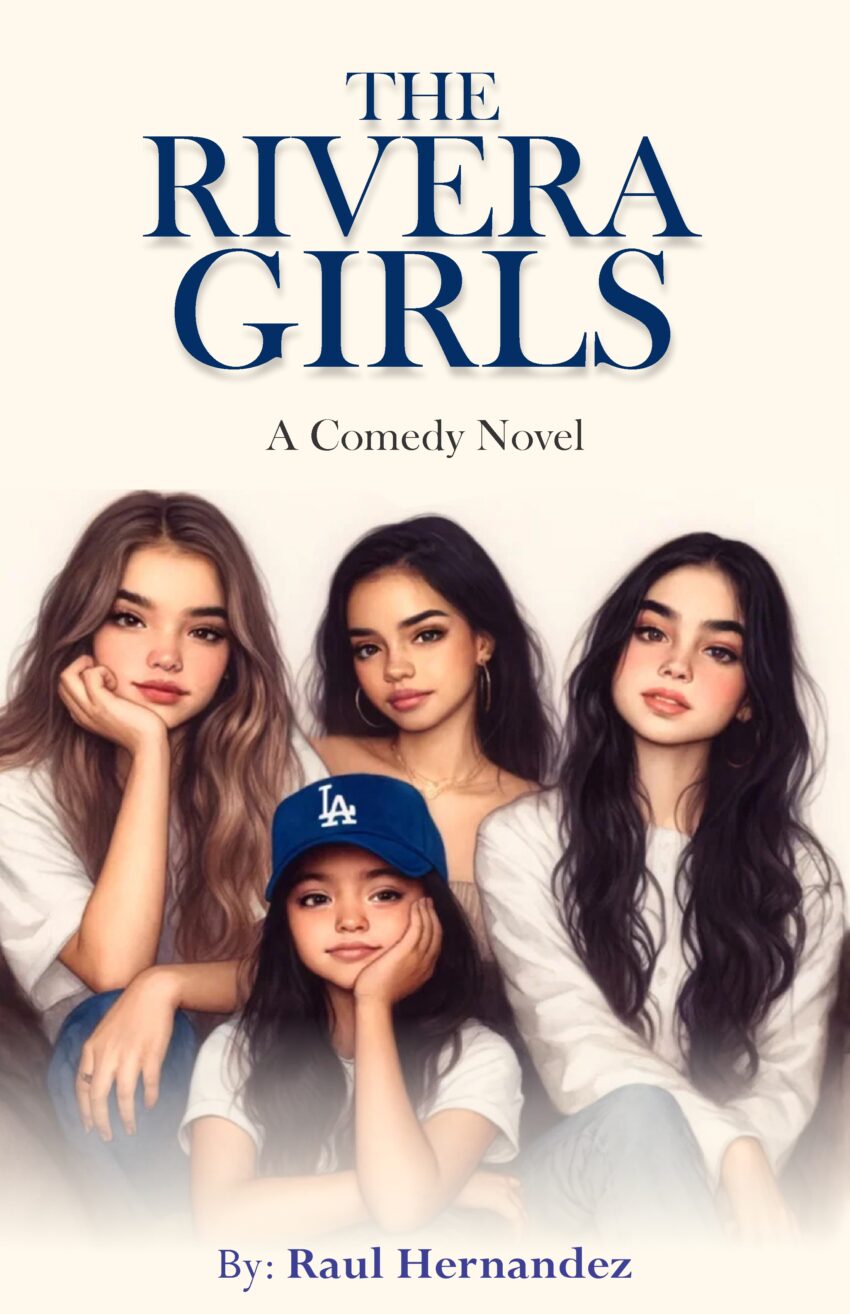
Even the cover I created was intentional—right down to the Dodger cap. A small detail, but the kind that signals identity without explanation. A quiet punctuation mark.
Here’s the bigger point:
Hollywood and publishing may eventually catch up—or they may not.
But waiting for someone else to tell your story is a losing game.
Sometimes, the only way to fix the narrative is to write your way into it.
That’s exactly what I did.
Hopefully, more Latino writers—Americans of Mexican, Cuban, Puerto Rican, Venezuelan, and other backgrounds—will tell stories about our middle- and upper-class lives and capture the full picture.
The whole story.
Our beautiful tapestry of everyday life.
The Rivera Girls is on Sale.
The audiobook will be out this summer and available wherever audiobooks are sold.
*********