It Would Take Only a Fraction of Them to Destroy Civilization and Starve Billions
 Nine countries possess nuclear weapons.
Together, they control an estimated 12,187 nuclear warheads—enough destructive power to turn cities into graveyards, cripple nations and leave generations of survivors fighting radiation, starvation and disease.
Of that total, about 9,745 warheads remain in military stockpiles for potential use. More than 4,000 are deployed with operational forces, and roughly 2,100 to 2,200 are maintained on high alert—ready to be launched on short notice.
 That is not security.
It is a loaded pistol pressed against the head of humanity.
Russia possesses an estimated 5,420 warheads. The United States has about 5,042. Together, the two countries control roughly 86% of the world’s total nuclear inventory and 83% of the warheads in military stockpiles.
China is a distant third with approximately 620 warheads, but its arsenal is expanding faster than that of any other nuclear power. China may possess more than 1,000 warheads by 2030 as it constructs missile silos, develops new delivery systems and prepares for a more dangerous confrontation with the United States.
Then there are France, the United Kingdom, India, Pakistan, Israel and North Korea.
Nine nations. Nine governments holding the power to incinerate millions of human beings in minutes.
“The weapons of war must be abolished before they abolish us.”
— President John F. Kennedy, addressing the United Nations in 1961. JFK Presidential Library
☢️ QUICK FACT CHECKLIST
🔴 Estimated nuclear warheads worldwide: 12,187
🌍 Nuclear-armed nations: 9
🇷🇺 Russia: Approximately 5,420
🇺🇸 United States: Approximately 5,042
🇨🇳 China: Approximately 620
🇫🇷 France: Approximately 370, including retired weapons awaiting dismantlement
🇬🇧 United Kingdom: Approximately 225
🇮🇳 India: Approximately 190
🇵🇰 Pakistan: Approximately 170
🇮🇱 Israel: Approximately 90
🇰🇵 North Korea: Approximately 60 assembled warheads
⚠️ Russia and the United States control nearly 86% of the world’s nuclear arsenal.
🚨 Thousands of warheads remain deployed or ready for potential military use.
🛠️ Every nuclear-armed nation is maintaining, expanding or modernizing its arsenal.
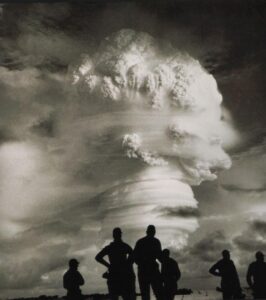
🔥 A single modern thermonuclear weapon can incinerate a city and kill hundreds of thousands of people.
⏳ The danger does not end with the explosion: radiation, firestorms, infrastructure collapse and potential nuclear winter could threaten millions—or billions—more.
These figures are estimates because governments cloak their arsenals in secrecy. But nobody should confuse uncertainty over the final number with uncertainty over the danger.
“A nuclear war cannot be won and must never be fought.”
— Presidents Ronald Reagan and Soviet leader Mikhail Gorbachev, 1985. Reagan Presidential Library
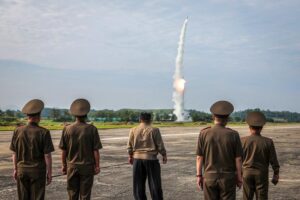
North Korea is the most glaring example.
The Stockholm International Peace Research Institute estimates that Kim Jong Un’s regime may have assembled approximately 60 nuclear warheads and produced enough fissile material for at least 30 more. A recent South Korean government estimate placed the possible total much higher—between 80 and 120—although that figure cannot be independently confirmed.
Whatever the exact number, North Korea continues producing nuclear material, testing missiles and threatening its neighbors while its people live under one of the most corrupt, brutal and repressive governments on Earth.
Kim is not some harmless, overweight cartoon dictator.
He controls missiles capable of carrying nuclear weapons. He imprisons political opponents, crushes dissent and rules through terror. Yet President Donald Trump continues to boast about his personal relationship with him while scaling back military exercises with South Korea in hopes of restarting diplomacy.
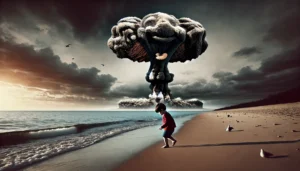 Meanwhile, Trump and his congressional buffoons and stooges have supported blockades, military threats and economic warfare against Iran.
But they are not blockading North Korean harbors.
They are not intercepting every ship carrying fuel, machinery or weapons technology into Kim’s police state. They are not demanding that China and Russia stop sustaining his regime. They are not treating North Korea’s growing nuclear arsenal with anything approaching the urgency shown toward Iran.
Perhaps that is because Kim already has the bomb.
 That is the perverse lesson nuclear powers have taught the world: If a country does not possess nuclear weapons, it can be threatened, bombed, sanctioned or invaded. Once it builds them, presidents start talking about respect, deterrence and diplomacy.
The result is predictable. Governments watch what happens and conclude that nuclear weapons are not merely instruments of mass murder. They are insurance policies.
That is how proliferation spreads.
The danger is no longer limited to a deliberate attack. A nuclear war could begin through a radar error, a misunderstood missile launch, a cyberattack, a malfunctioning warning system or a frightened leader making a catastrophic decision with only minutes to think.
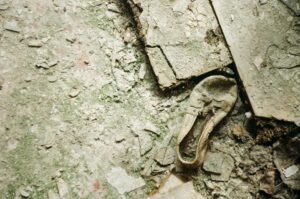
Arms-control agreements are collapsing. Communication between rival governments is deteriorating. Political leaders increasingly speak about nuclear weapons as usable instruments of power rather than weapons that must never be fired.
At the same time, all nine nuclear-armed countries are modernizing their forces. They are building new missiles, submarines, bombers, warheads and command systems. They call it deterrence.
The arms manufacturers call it business.
Humanity should call it madness.
“Humanity and nuclear weapons cannot coexist.”
— Setsuko Thurlow, Hiroshima survivor
The world once had more than 70,000 nuclear weapons. That number has fallen dramatically, proving that disarmament is possible. But the reduction has slowed, and the number of usable weapons in military stockpiles is rising again.
Twelve thousand one hundred eighty-seven warheads remain.
It would take only one to destroy a city.
It would take only a handful to alter civilization.
And it would take only one reckless, brutal or delusional leader to start something that no army, Congress or president could stop.
Sources: SIPRI Yearbook 2026 and the Federation of American Scientists’ 2026 nuclear inventory.