


United States Supreme Court Building
Repeating Trump’s Election Claims Does Not Make Them True
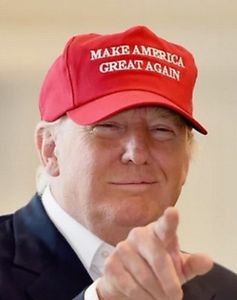 Repeating a claim without evidence does not make it true.
For nearly six years, Donald Trump has claimed that widespread voter fraud cost him the 2020 presidential election. But in the American legal system, allegations are tested through evidence — not repetition.
More than 60 state and federal court decisions rejected lawsuits or other legal efforts seeking to overturn the election results. Judges appointed by Republican and Democratic presidents found no evidence that widespread fraud changed the outcome.
Bipartisan election officials, hand recounts, post-election audits and years of litigation reached the same basic conclusion. The U.S. Cybersecurity and Infrastructure Security Agency called the 2020 election “the most secure in American history.”
That does not mean election crimes never occur. They do. Individual cases of voter fraud are investigated and prosecuted every year.
But isolated criminal acts are fundamentally different from evidence of a coordinated nationwide conspiracy capable of changing the outcome of a presidential election.
Trump Targets Mail-In Voting
 Despite those findings, Trump has continued to argue that mail-in voting is vulnerable to widespread fraud.
In 2026, he issued an executive order directing federal agencies to tighten mail-ballot procedures.
The order would require states to compare their voter rolls with a federal citizenship list maintained by the Department of Homeland Security. It also would limit mailed ballots to voters appearing on that federal list and direct the U.S. Postal Service to adopt new barcode and mailing procedures for ballots.
States that do not comply could face restrictions affecting the delivery of mail ballots.
States Challenge Trump’s Authority
Twenty-three states and the District of Columbia sued to block the order.
They argue that the Constitution gives states — not the president — primary responsibility for administering elections. The challengers contend that a president cannot rewrite election laws through an executive order.
They also warned that the changes could confuse voters and election officials before an election.
What the Supreme Court Actually Decided
 The U.S. Supreme Court did not decide whether Trump’s executive order is legal or constitutional.
Instead, the Court issued a temporary procedural ruling allowing parts of the order to take effect while the lawsuits continue.
The majority concluded that the states bringing this particular challenge had not demonstrated that they had legal standing to block the order at this stage of the case.
In other words, the Court did not rule on the merits of Trump’s plan. It decided that the challengers had not yet established the legal right to stop parts of the order through this lawsuit.
A Simple Way to Understand the Ruling
 Think of it this way:
A school announces a new rule. A student immediately sues before the rule has been enforced or caused a specific injury.
A judge responds: “We are not deciding today whether the rule is good or bad. We are saying that this student has not yet shown the kind of injury needed to challenge it. If the rule causes a legally recognized injury, the courts can consider that issue later.”
That is essentially what the Supreme Court did.
What the Court Did Not Decide
The Court did not rule that:
- Trump’s executive order is constitutional.
- The president has unlimited power to regulate state elections.
- Widespread voter fraud changed the 2020 election.
- Mail-in voting is inherently fraudulent.
- The remaining lawsuits must be dismissed.
The ruling concerned whether the states had standing to block parts of the order at this point — not whether the underlying policy is lawful.
The Legal Fight Continues
 The legal battle is far from over.
Other lawsuits remain pending, including challenges to the Postal Service provisions. Lower courts must continue examining the constitutional and statutory questions raised by the order.
The Supreme Court could eventually hear the dispute again and decide whether Trump’s executive order exceeds presidential authority or violates the Constitution.
🔴 Quick Fact Checklist
🔴 More than 60 state and federal court decisions rejected lawsuits or legal efforts seeking to overturn the 2020 election results.
🔴 Judges appointed by Republican and Democratic presidents rejected the election challenges.
🔴 Recounts, audits and bipartisan election officials confirmed the certified results.
🔴 CISA called the 2020 election “the most secure in American history.”
🔴 Trump’s 2026 executive order seeks to require states to compare voter rolls with a federal citizenship database.
🔴 The order also calls for new procedures governing mailed ballots.
🔴 Twenty-three states and Washington, D.C., sued to block the order.
🔴 The challengers argue that the Constitution gives states primary authority over elections.
🔴 The Supreme Court did not declare Trump’s order constitutional or unconstitutional.
🔴 The Court issued a temporary procedural ruling allowing parts of the order to proceed while litigation continues.
🔴 The decision turned on legal standing — not the ultimate legality of Trump’s policy.
🔴 Additional legal challenges remain pending.
⚖️ Bottom Line
 The Supreme Court gave Trump a temporary procedural victory. It did not uphold his executive order as constitutional, endorse his claims about widespread voter fraud or issue a final ruling on presidential authority over mail-ballot procedures.
The legal fight continues.
In America, courts determine facts through evidence presented under oath — not by how often a claim is repeated. After years of investigations, audits, recounts and litigation, no evidence has been produced showing that widespread voter fraud changed the outcome of the 2020 presidential election.
Primary Sources and Related Coverage
- U.S. Supreme Court order, Aug. 24, 2026
- AP: Supreme Court allows Trump’s mail-voting order to proceed while lawsuits continue
- Reuters: Trump’s mail-ballot order gets Supreme Court boost as legal fights continue
- CISA: “The November 3 election was the most secure in American history”
- AP review of 2020 election-fraud claims and court rulings