
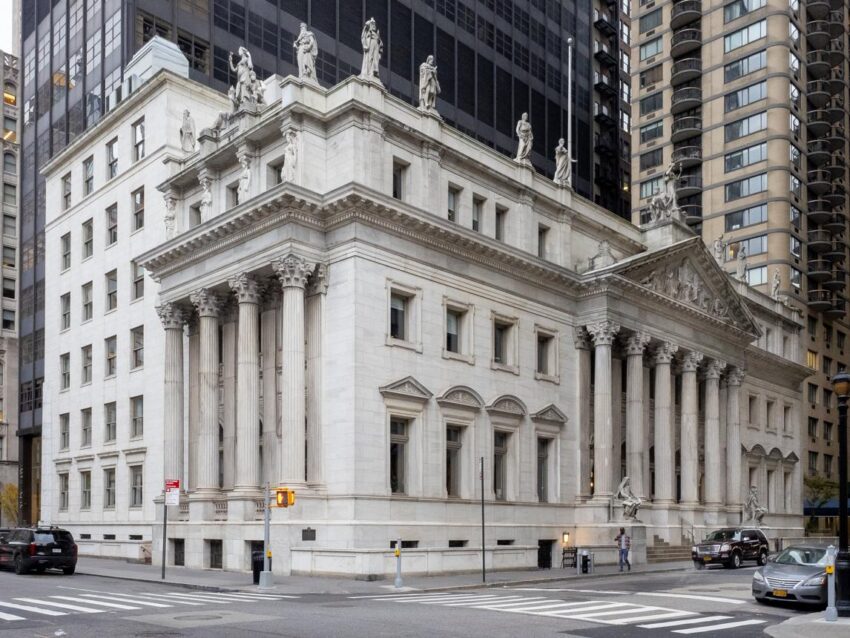
Civil Rights Corps v. LaSalle (No. 24-2251)
Should Attorney Discipline Be Public or Secret?
Presentation Narrative:
 Imagine a prosecutor is accused of hiding evidence that could prove someone is innocent.
Or a defense attorney is accused of lying to a judge. Should the public be able to see how those accusations are investigated and resolved?
That question lies at the heart of Civil Rights Corps v. LaSalle, one of the most important First Amendment transparency cases before the U.S. Court of Appeals for the Second Circuit.
Civil Rights Corps, a nonprofit organization, filed attorney misconduct complaints against several New York prosecutors. But New York’s attorney disciplinary system operates largely behind closed doors. Unless public discipline is ultimately imposed, complaints, hearings and many court records remain confidential.
The organization argued that this secrecy prevents the public from knowing whether lawyers—especially government prosecutors with enormous power over people’s liberty—are being held accountable for ethical misconduct.
 A federal district judge agreed in large part.
The court ruled that the First Amendment generally gives the public the right to attend attorney disciplinary proceedings that may result in public discipline and to inspect many of the records associated with those proceedings.
Justice Hector D. LaSalle, who oversees attorney discipline in New York’s Second Judicial Department, appealed the ruling.
The appeal asks whether attorney discipline should remain largely confidential or whether the Constitution requires greater public access.
The outcome could reshape attorney discipline in New York and potentially influence similar systems across the country.
🎯 Why This Case Matters
This case is about far more than lawyers.
It asks whether the Constitution requires transparency when attorneys—especially prosecutors entrusted with deciding who is charged with crimes—are accused of violating the rules governing their profession.
The Second Circuit’s decision could redefine the balance between public accountability, attorney privacy, judicial independence and the First Amendment, potentially shaping attorney disciplinary systems well beyond New York.
📝 Quick Fact Checklist
| Case | Civil Rights Corps v. LaSalle |
|---|---|
| Court | U.S. Court of Appeals for the Second Circuit |
| Case No. | 24-2251 |
| Issue | Does the First Amendment guarantee public access to attorney disciplinary proceedings and records? |
| Plaintiff | Civil Rights Corps |
| Defendant | Justice Hector D. LaSalle |
| Constitutional Amendment | First Amendment |
| District Court Ruling | Largely favored greater public access |
| Current Status | Appeal pending before the Second Circuit |
⚖️ Arguments for Public Access
Government Accountability
Prosecutors and attorneys exercise enormous authority over people’s lives. Citizens should know whether allegations of misconduct are investigated fairly and whether lawyers are held accountable.
Public Confidence
Open proceedings foster trust in the justice system. Secret investigations can create the perception that lawyers are protecting one another.
First Amendment
Civil Rights Corps argues attorney discipline is part of the judicial process. Like many court proceedings, it should be presumptively open to the public.
Transparency Improves Justice
Public scrutiny can:
- Expose misconduct
- Deter unethical behavior
- Increase confidence in disciplinary decisions
Equal Treatment
Police officers, elected officials and many public employees often face public disciplinary proceedings. Attorneys should not receive greater secrecy simply because they are members of the legal profession.
🛡️ Arguments for Confidentiality
Protect Innocent Attorneys
Many complaints are ultimately found to be meritless. Public disclosure could unfairly damage an attorney’s career and reputation.
Encourage Witnesses
Witnesses and complainants may be more willing to cooperate if investigations remain confidential.
Protect Investigations
Private proceedings reduce outside pressure and allow disciplinary authorities to investigate allegations without media attention or public influence.
Historical Practice
Attorney discipline has traditionally been confidential in New York and many other states. The state argues there is no historical basis for a constitutional right of access.
Judicial Independence
The courts—not public opinion—are responsible for regulating lawyers. Confidentiality helps preserve an independent disciplinary process.
📌 What’s at Stake?
If the Second Circuit Affirms the District Court
✅ Many attorney disciplinary hearings could become open to the public.
✅ Court records would become far more accessible.
✅ Journalists could cover attorney misconduct cases much earlier.
✅ Public oversight of prosecutors and attorneys would increase significantly.
If the Second Circuit Reverses the District Court
✅ New York’s largely confidential disciplinary system would remain in place.
✅ Complaints, investigations and hearings would generally remain closed unless public discipline is imposed.