

By Raul Hernandez
If there were ever a poster boy for the death penalty, Randolph “Randy” Kling would be a strong contender.
Kling came to mind when Gov. Gavin Newsom announced plans to commute the death sentences of all 548 condemned inmates in California to life in prison without the possibility of parole.
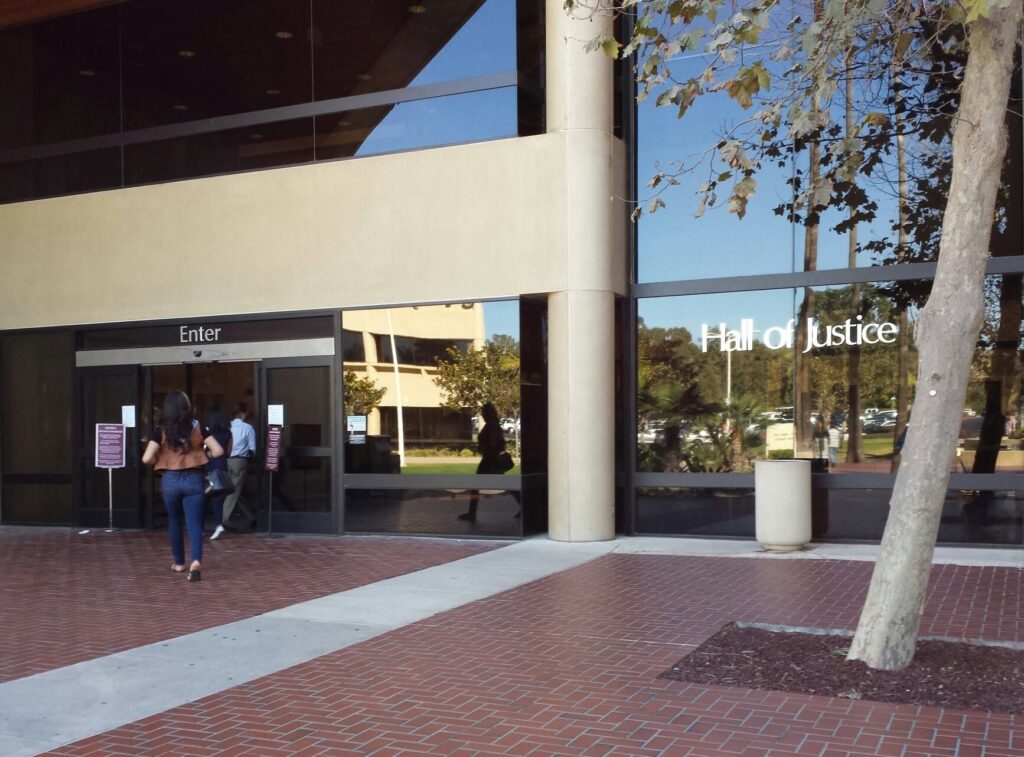
I had a front-row seat, so to speak, covering Kling’s capital murder trial for the Ventura County Star.
This wasn’t my first capital case. In more than three decades as a newspaper reporter, I covered more than 120 murder trials while working in four newsrooms across two states. Eighteen of those years were spent covering the courts.
Yet what unfolded in Judge Rebecca Riley’s courtroom had the twists of a Hollywood murder mystery. The bodies, however, were real. So was the grief the victims’ families carried into that courtroom.
A Father, a Son and a Family’s Grief
William “Bill” Budfuloski, 53, was shot to death at his Lancaster metal fabrication business on Aug. 9, 2003. His son, Michael, a 31-year-old graphic artist who took control of his father’s company, was murdered outside his Simi Valley home on Feb. 24, 2004.
A father. Then his son.
During the punishment phase of the trial, relatives of the victims tearfully spoke of the impact of the crimes, including the loss of two men they described as honest, hardworking and loving.
Daniel Budfuloski said his brother Michael would never be the best man at his wedding.
“My father will never be able to dance with my wife on her wedding day,” he said.
The prosecution argued that Kling killed both men to gain control of the business. Jurors deadlocked on the financial-gain special circumstance. They nevertheless convicted him of both first-degree murders and found that he had lain in wait to kill Michael.
First, He Killed the Dog
There was another victim: Moo, Bill’s dog.
Moo stayed at the business and barked when people approached. More than two months before Bill’s murder, Kling shot and killed the dog. The jury convicted him of animal cruelty, too.
That detail has stayed with me. First, the dog that alerted his owner to approaching visitors. Then the owner. Then his son.
When the murder verdicts were read, Kling showed no emotion. His expression alone could tell us little. The evidence and the jury’s findings told us much more.
The Baby Photograph I Never Forgot
One image from the trial has stayed with me: a photograph of Kling as an infant, wearing a diaper. His head appeared to me to be the size of an adult’s.
I found it strange then, and I remember it clearly now.
Later testimony and evidence in the trial described Kling’s head as unusually large in infancy and reported that he had been deprived of oxygen at birth and would bang his head against his playpen until it bled.
According to that account, Kling was aggressive from kindergarten onward but exceptionally bright. Elementary school officials described him as “far ahead of everybody else in his age range,” while finding that disciplining him was “nearly impossible.”
The account described tantrums, public defecation until at least age nine and incidents in which he urinated on schoolmates who angered him. After being sent to the principal’s office on one occasion, he urinated on the principal and was expelled.
In 1968, when Kling was 11, his mother, Beverly, took him from their Rialto home to Camarillo State Hospital, the notorious mission-style psychiatric institution at the base of the Santa Monica Mountains.
Both Sides’ Experts Deemed Kling a Severe Psychopath
There might have been sympathy in the courtroom for the baby who banged his head until it bled, or for the child who tried to hang himself.
But the psychological assessments were damning. According to defense expert Rahn Minagawa and prosecution expert Kris Mohandie — both forensic psychologists — deemed Kling a severe psychopath.
Mohandie placed Kling in the 99th percentile of the prison population for psychopathy, citing his disregard for the rights of others, his lying and his lack of remorse.
“At the top of the apex, if you will,” Mohandie said.
Prosecutor Cheryl Temple considered Kling among the most sinister and intelligent criminals California had seen.
Temple noted court testimony in which a psychologist testified that Kling has 19 of the 20 traits of a psychopath, from a grandiose sense of self-worth to a lying, conniving and manipulative personality.
Kling’s lawyers, Cynthia Ellington and Melanie Miles, described him as a man tormented by mental illness and a troubled family life. They described an abusive father who beat Kling, his mother, his sister and the family dog.
Every defendant has a history. Evidence of childhood trauma, impairment and abuse deserves serious consideration when jurors must decide whether someone should live or die.
But the victims had childhoods, too. They had family photographs, people who loved them and futures someone else decided to take away.
Compassion for a convicted murderer should never push those lives into the background.
Newsom’s Decision, the Victims’ Families
Newsom explained his decision in a this month in public letter, saying that “state-sanctioned killing is incompatible with California’s values, undermines the foundations of our legal system, and diminishes each of us.”
I disagree. In cases like Kling’s, imposing the ultimate punishment recognizes the gravity of deliberately taking innocent lives.
Where Californians Stand on Capital Punishment
A September 2023 survey by the Public Policy Institute of California found that 62% of California adults favored the death penalty for people convicted of murder — 28% strongly and 34% somewhat. Another 37% opposed it.
The same survey also revealed a distinction: When asked to choose a punishment for first-degree murder, 55% preferred life without parole and 43% chose the death penalty. Those findings show how the question shapes the response, but they also demonstrate substantial support for capital punishment.
Ventura County’s District Attorney Pushes Back
Ventura County District Attorney Erik Nasarenko criticized the governor’s decision.
“Governor Newsom’s decision to commute existing death sentences in California directly impacts the families of 15 victims in Ventura County,” Nasarenko said in a statement. “These were the most heinous and horrific crimes in our county over the past fifty years, and the victims’ families have endured unimaginable loss, grief and suffering.”
Nasarenko emphasized that the sentences followed consideration of the individual cases.
“These death sentences were imposed after a jury carefully considered the evidence, facts and circumstances of each individual case,” he said. “They represent years of courtroom proceedings, appeals and judicial review.”
His central objection gets to the heart of this debate.
“Life without the possibility of parole is a severe punishment, but it was not the sentence determined in a courtroom for these 15 cases, and it replaces the decision-making authority of the judge and jury with gubernatorial discretion,” Nasarenko said.
The governor has constitutional clemency authority. That does not put his exercise of that authority beyond criticism. A blanket decision deserves scrutiny precisely because these cases involved different evidence, different victims and separate judgments about punishment.
Political Ambition at the Families’ Expense
Newsom appears to have his sights set on the presidency in 2028. In my view, he loves kicking up political dust: It builds name recognition and keeps him in front of cameras and microphones.
I believe this decision will backfire nationwide. Voters will see it as an attempt to score political points at the expense of families whose loved ones were murdered by cold-blooded killers like Kling.
Those families deserve more than a supporting role in a governor’s political narrative.
Why Kling’s Death Sentence Was Justified
I support the death penalty for the most aggravated murders, with rigorous safeguards and meaningful opportunities to challenge a conviction. The danger of executing an innocent person demands an honest response from anyone who supports capital punishment.
That concern, however, does not resolve every question about what constitutes a just sentence.
What punishment is warranted for a man convicted of deliberately killing a father and then ambushing his son months later?
Life without parole is severe. I understand why many people believe it should be the maximum punishment. I disagree that it is sufficient in every case.
Punishment should reflect the offender’s responsibility and the magnitude of the crime. In my judgment, Kling’s murders warranted the harshest sentence the law permits.
His lawyers challenged the prosecution’s circumstantial evidence and argued that he lacked a motive. The jury heard the defense, convicted him and later recommended death. Riley imposed the death sentence in February 2010.
As a reporter, my responsibility was to describe the evidence and proceedings fairly. As a commentator, my judgment is straightforward: The sentence was justified.
An execution cannot bring Bill or Michael Budfuloski back. It cannot repair their families’ loss. No punishment can.
But that does not relieve society of its obligation to impose a sentence proportionate to the crime.
A father was murdered. Months later, his son was ambushed and killed.
For those crimes, I believe Randolph Kling earned the death penalty.